
Daube De Taureau
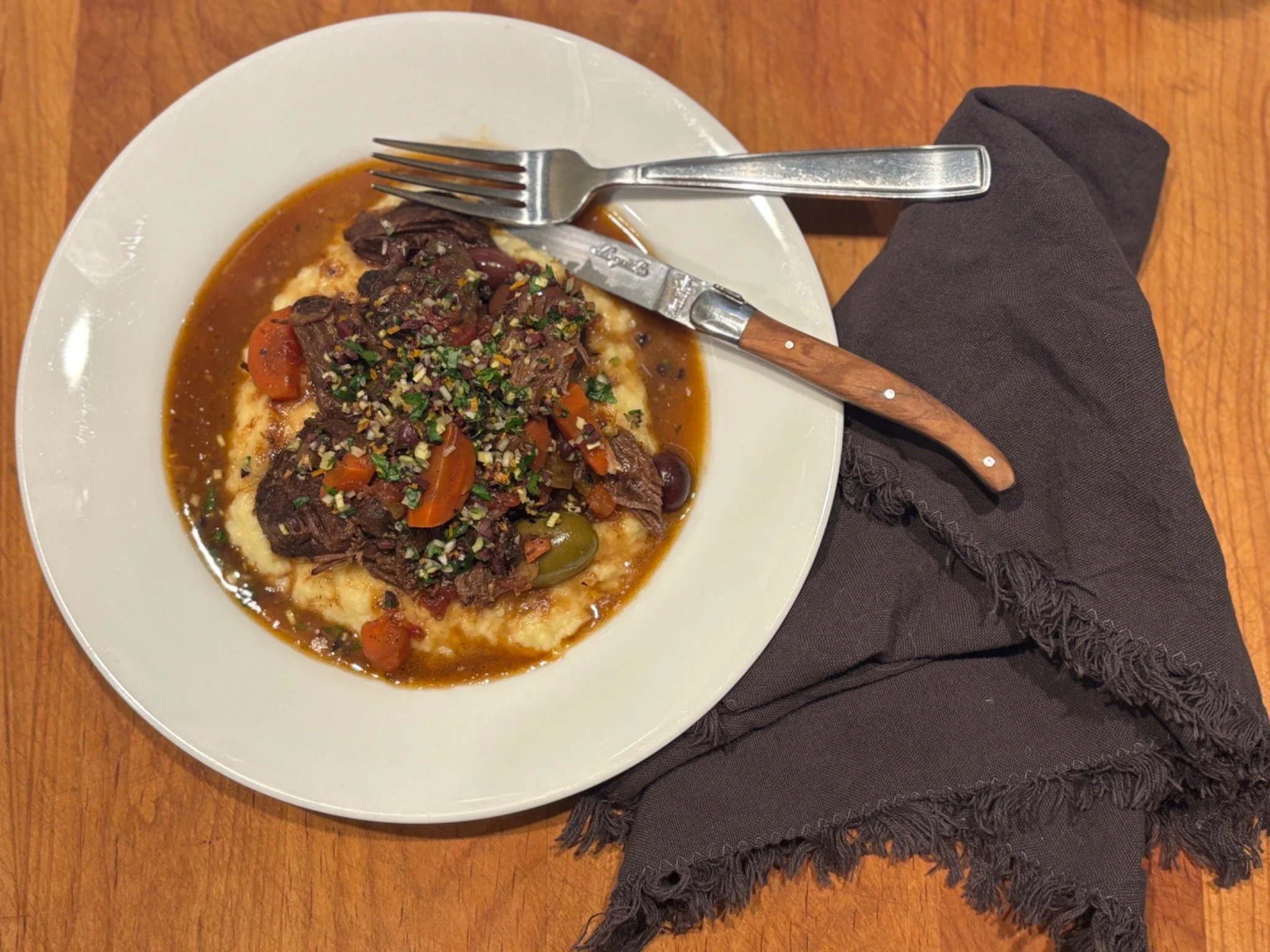
Daube de Taureau - Recipe by RUSS FLINT
This is slow food, but not complicated food. The key is preparation. Get everything ready before you start—mise en place. Once you understand the flow of this recipe, you can apply it to almost any braise. I use the same method for pork shoulder, lamb, and chicken legs. Learn it once and it stays with you.
Braising is about building layer of flavor, patience and trust. You do the work early—seasoning, browning, building the base—then you step back.
A Note on Timing
Lately, I’ve been making my braises a day or two before I plan to serve them. It’s not about convenience—it’s about letting the dish settle. As the stew cools and rests, the flavors meld and integrate. We all have experienced a dish that was good today is way better the next day.
There’s also a practical benefit: When chilled the excess fat rises and can be easily removed, and reheating gently gives you more control over seasoning and texture. In my experience, most braises don’t just hold well—they improve with time. If you can plan ahead, it’s worth it.
---
Choosing the Beef
There’s plenty of debate about which cut to use for daube. At the end of the day, any cut will do, but you’ll want to stay in the shoulder (chuck) or the round (hind leg). Save ribeyes and strip steaks for the grill or skillet.
My preferred cut for Daube de Taureau is boneless short rib, also known as zabuton. It sits beneath the shoulder blade and has excellent marbling with relatively little connective tissue. You can cook it whole or cut into individual portions depending on how you plan to serve it.
That said, connective tissue matters. I always add a beef shank (osso buco cut) or a few oxtails to bring collagen and richness to the stew. An added bonus is leftovers, which open the door to a number of other dishes.
Marinade
Spices are optional—use what you have.
1 bottle dry white wine
Zest and juice of 1 orange
4 allspice berries
4 whole cloves
1 small piece nutmeg
2 Tbsp whole black peppercorns
6 garlic cloves
½ onion, roughly chopped
4 Tbsp kosher salt
Combine all ingredients in a container large enough to hold the beef.
Mise en Place
2 lb boneless short rib (zabuton)
1 beef shank (1–1½ lb), osso buco cut
2–3 oxtail sections (about 1½ lb total)
2 medium carrots, peeled, halved lengthwise, sliced ¼-inch
1 large yellow onion, diced ¼-inch
4 celery stalks, halved lengthwise, diced ¼-inch
6 garlic cloves, roughly chopped
2 bay leaves
4 Tbsp fresh thyme (or 1 Tbsp dried)
1 can diced tomatoes
¼ cup Champagne vinegar or white wine vinegar
½ of the strained marinade
Zest of 1 orange, removed in large strips
2 quarts beef stock
Olive oil
Salt and black pepper
8 oz olives (dry-cured black or mixed French), pitted or not
Method
Two days before serving:
Combine beef and marinade in a non-reactive container. Refrigerate.
After 24 hours:
Remove beef and dry thoroughly. If time allows, refrigerate uncovered for 6–24 hours to dry the surface.
Cooking day:
Bring beef to room temperature and lightly season with salt and pepper.
Preheat oven to 350°F.
Heat olive oil in a heavy pot until just smoking. Brown beef deeply on all sides, working in batches. Remove beef.
Discard scorched fat if necessary; add fresh oil.
Sauté onions until translucent. Add carrots and celery; cook until lightly colored.
Add bay leaves and thyme. Adjust heat as needed.
Add garlic and cook briefly.
Add tomatoes and cook until the pan is nearly dry and the tomatoes caramelize slightly.
Add vinegar and reduce again until nearly dry.
Return beef to the pot. Add stock and strained marinade to just cover the meat.
Bring to a boil, cover, and transfer to the oven.
Cook at least 2 hours, until the meat is fork-tender.
Cool to room temperature and refrigerate overnight if possible.
To Finish and Serve
Allow at least one hour.
Skim fat from the surface. Remove meat and tear into bite-size pieces or leave whole for presentation. Return meat to the cooking liquid and reheat gently.
Optional: Remove a few cups of strained liquid and reduce vigorously until thick and glossy. Finish with butter and spoon over the beef before serving.
Celeriac & Potato Purée
(Can be made up to 3 days ahead)
1 large celeriac (or 2 small), peeled and quartered
2 medium yellow potatoes, peeled and quartered
½ cup heavy cream
¼ stick butter
Nutmeg, to taste
Salt, to taste
1 tsp Champagne vinegar (more if needed)
Boil celeriac and potatoes in salted water until tender. Process until smooth. Heat butter, cream, and nutmeg until butter melts and cream simmers. Add purée, season with vinegar and salt, and cook gently until thick, stirring often.
Olive Gremolata
Zest of ½ orange, finely chopped
¼ bunch flat-leaf parsley, finely chopped
¼ cup olives, pitted and finely chopped
2 garlic cloves, minced
Chop ingredients separately, then chop together until combined. Keep chilled until service.
To Plate
Warm plates. Remove bay leaves and orange peel from the daube. Check seasoning.
Spoon celeriac purée onto the plate, top with beef and vegetables, and finish with cooking liquid or reduced sauce. Sprinkle with olive gremolata and serve immediately.
Quisque iaculis facilisis lacinia. Mauris euismod pellentesque tellus sit amet mollis.